

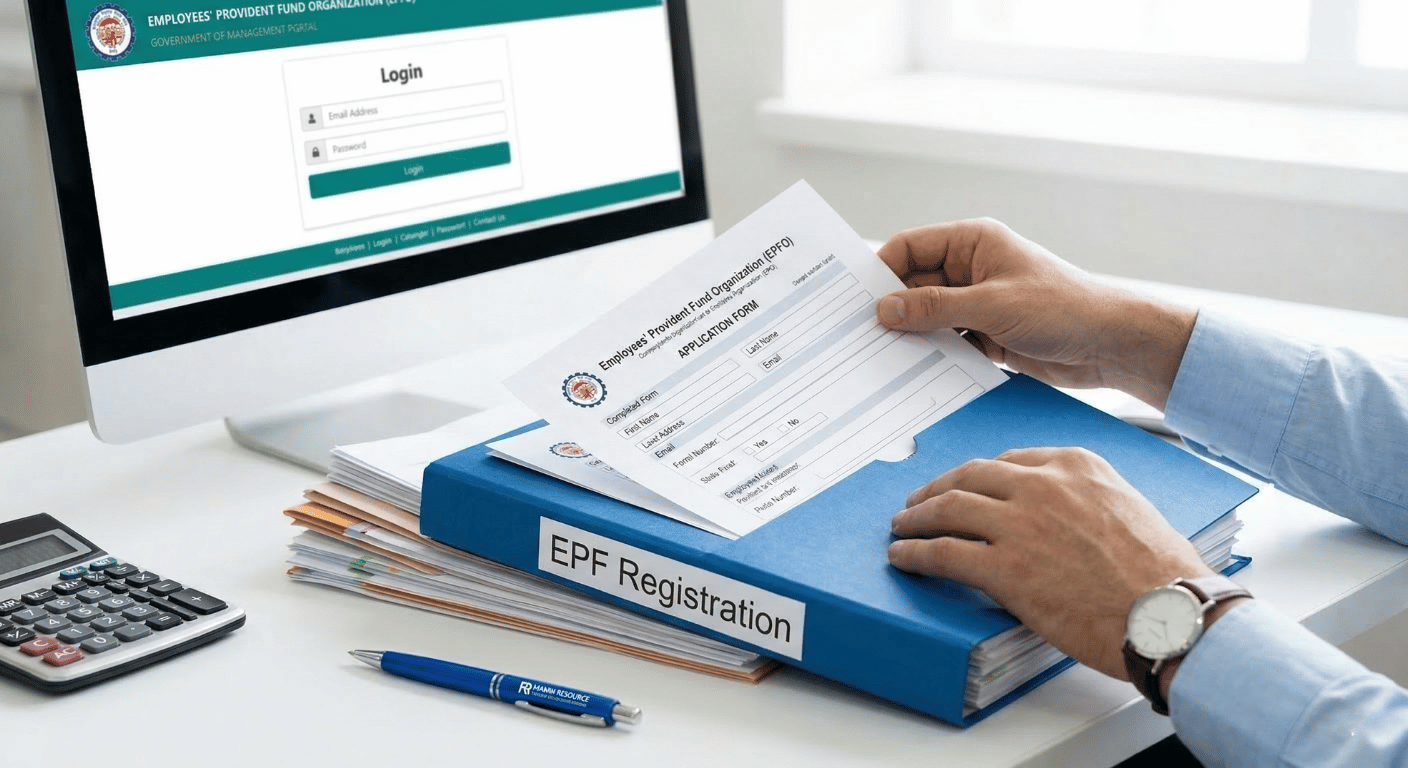
EPF Registration i.e. Employees’ Provident Fund is a mandatory saving scheme that is very beneficial for employers as well as employees. It is basically an online process through which an employer enrolls their business entity with the Employees Provident Fund Organisation to provide Provident Fund benefits to their all employees.
It is a government mandated scheme for employees helping them gain long term financial stability. Under EPF Registration, both employer and employee contribute a fixed amount of their salary every month that accumulates into a secure fund for retirement, pension and insurance benefits.
Employees Provident Fund Registration allows companies to avail structured savings and social security benefits to employees while staying compliant with Indian Labour Laws.
Why EPF is Important?
EPF is not just a compliance, it’s a complete financial security system that covers:
👉 Retirement + Pension + Insurance + Tax Savings
EPF Eligibility Criteria
To ensure compliance with the Employees’ Provide Fund laws governed by EPFO, every business shall meet certain eligibility conditions such as:-
For Employers (Businesses)
EPF Registration becomes mandatory when business employees 20 or more employees. It is applicable to factories, companies, startups, shops and service-based businesses. Once registered under EPF, compliance shall continue even if employees count falls below 20.
Note – Businesses with fewer than 20 employees can also register voluntarily to provide PF benefits.
For Employees
An employee of the company becomes eligible for EPF if they earn upto INR 15,000 per month (basic + DA). Employees earning above INR 15,000 can also join with employer consent. However, student must have a valid Aadhaar Card and KYC details.
🔹 Key Points to Remember
- ✔ EPF applies to both permanent and contractual employees
- ✔ International workers are also covered under EPF rules
- ✔ Once enrolled, contributions must be made regularly
EPF Registration Process
At TrustLex Consulting, we follow a simple, step by step process to ensure quick and hassle free EPF Registration:-
Step 1 – Register on EPFO portal Begin with registration on the official portal of EPF.
Step 2 – Fill establishment details Your company’s details are required to be registered such as:-
- Company’s Details
- Type of Organisation
- Date of Incorporation
- Address & Contact Details
Step 3 – Submit Employer KYC At third step, employers KYC is done by submitting information such as:-
- PAN Details
- Aadhaar Details
- Digital Signature Certificate
Step 4 – Add employee details After employer details are filled, then comes submitting employees details one by one. Add employees name and aadhaar number, salary, date of joining.
Step 5 – Generate PF Establishment Code Post application is approved, you will receive PF Establishment Code. Now, with the help of TrustLex you are now legally registered with EPF. The PF Establishment Code is a unique identification number issued to every business after successful EPF registration by the Employees’ Provident Fund Organisation.
The code generally looks like this: {DL/CPM/1234567/000}
Breakdown:
- DL → State code (Delhi)
- CPM → Regional office code
- 1234567 → Establishment number
- 000 → Extension (if any)
EPF Contribution Breakdown
Employee Contribution shall be 12% of basic salary plus dearness allowance. The entire amount shall be deposited in EPF Account of employee.
Employer Contribution is divided into two parts. One is 8.33% i.e. Employees’ Pension Scheme (subject to INR 15,000 salary cap). Second part is 3.67% i.e. Employees Provident fund.
EPF Contribution Table
| Component | Employee Contribution | Employer Contribution |
| EPF | 12% | 3.67% |
| EPS (Pension) | – | 8.33% |
| Total | 12% | 12% |
Important Note
- EPS (pension) contribution is calculated on a maximum salary of ₹15,000
- If salary is higher, EPS remains capped
- Remaining employer contribution goes to EPF
EPF Benefits
- Saving for Retirement
- Pension Benefits
- Insurance Coverage
- Tax Benefits
- Partial Withdrawal Facility
- Easy Transfer & Online Access
- Multiple Benefits for Employers
EPF Compliance Services
TrustLex offers timely:-
- Monthly ECR filing
- PF return filing
- Employee KYC updates
- PF withdrawal assistance
- Notice handling & compliance support
EPF Due Dates
Monthly EPF Payment Due Date: 15th of the following month
EPF Return Filing (ECR Filing)
- MonthlyECR (Electronic Challan cum Return) filing is mandatory
- Must be filed before or along with payment
EPF Late Payment Penalty
- Interest (Section 7Q): 12% per annum
- Damages (Section 14B): 5% to 25% depending on delay
👉 Download the EPF compliance calendar PDF for complete due date tracking.
EPF vs ESIC Comparison
| BASIS | EPF (Provident Fund) | ESIC (Employees’ Insurance) |
| Purpose | Retirement savings | Medical & social security |
| Governing Body | EPFO | ESIC |
| Applicability | 20+ employees | 10+ employees |
| Salary Limit | No limit | Up to ₹21,000/month |
| Employee Contribution | 12% of salary | 0.75% of wages |
| Employer Contribution | 12% (split into EPF + EPS) | 3.25% of wages |
| Benefits | Pension, retirement fund, insurance | Medical, maternity, disability |
| Coverage | Long-term savings | Short-term health benefits |
| Registration Requirement | Mandatory | Mandatory |
| Return Filing | Monthly ECR | Monthly contribution |
| Withdrawal | Allowed under conditions | Not applicable |
When Does Your Business Need Both ESI and PF?
- When Your Business Have 20+ Employees EPF becomes necessary for businesses having 20+ employees and ESIC also applies if salary criteria is met.
- When Employees Earns INR 21,000 or less EPF applies to all employees of the company. However ESIC applies only to those employees earning less than or equal to INR 21,000 or less.
- When You Wish to be Complete Labour Law Compliance If you follow EPF Guidelines, your company’s employee shall be financially secure and avail retirement benefits. And if we talk about ESIC, then it shall offer medical and insurance coverage to all employees.
Circumstances of PF Non-Compliance
If you somehow fail to comply with PF or ESI Compliance then unfortunately your company shall have to:-
- Heavy Penalties & Interest’
- Legal Notices
- Backdated Payment
- Risk During Audits
When Can You Withdraw your Provident Fund?
- After retirement
- After 2 months of unemployment
- Partial withdrawal cases:
- Medical
- Marriage
- Education
- Home loan
📞 Get Free Consultation from TrustLex!
👉 Not sure if EPF & ESIC apply to your business?
Get a free eligibility check from our experts.
📞 Talk to Best PF Experts 💬 WhatsApp on +91 8510019004 📩 Get Free Consultation from Mr. Rahul Rathore

Talk To Us :
Get Expert Consultation :